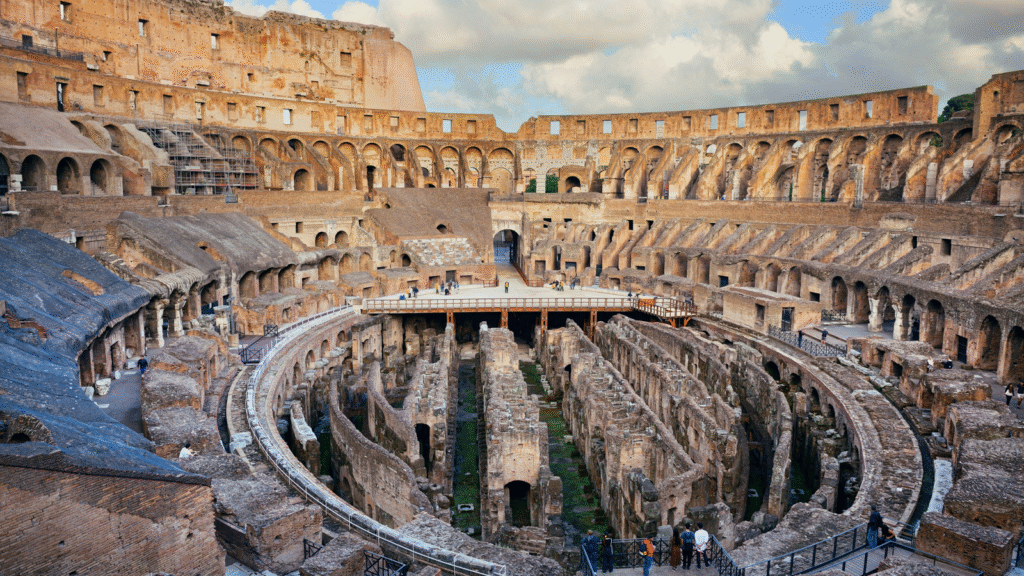
Few structures in the world can rival the majesty and significance of the Colosseum. Nestled in the heart of Rome, this historic amphitheater has borne witness to emperors, gladiators, roaring crowds, and countless transformations over the ages. A visit to the Colosseum transcends mere sightseeing — it’s an opportunity to step into a vibrant chapter of human history.
A Monument Designed for Entertainment
The Colosseum, commonly referred to as the Flavian Amphitheatre, was completed in 80 AD and had the capacity to accommodate between 50,000 and 80,000 spectators. It was crafted for grand entertainment: gladiatorial contests, wild-animal hunts, theatrical performances, and even simulated naval battles.
As you walk through its corridors today, you can almost hear the distant cheers of the crowds and envision the spectacular events that captivated the Roman populace.
Timeless Architectural Brilliance
The extraordinary nature of the Colosseum lies not only in its rich history but also in its remarkable engineering. Primarily constructed from travertine stone, tuff, and concrete, the structure boasts an intricate network of arches, corridors, trapdoors, and underground tunnels known as the hypogeum.
This elaborate system once facilitated the swift movement of animals, gladiators, and stage machinery — a true testament to ancient ingenuity.
The Hypogeum: A Hidden Realm Beneath
Among the most intriguing sections is the hypogeum, an intricate maze located beneath the arena floor. Here, enslaved individuals prepared for the spectacles, transported animals via wooden elevators, and orchestrated surprises for the audience.
Today, portions of the hypogeum are accessible to visitors, providing a unique insight into the behind-the-scenes world of ancient Roman entertainment.
A Timeless Symbol of Rome
Despite suffering damage from earthquakes, fires, and centuries of pillaging, the Colosseum endures as a symbol of Rome’s strength. It has functioned as a fortress, a quarry, a Christian shrine, and is now recognized as a UNESCO World Heritage Site, welcoming millions of visitors annually.
Its grand arches stand as an iconic representation of Rome itself — a fusion of power, beauty, and resilience.
Preparing for Your Visit
To enhance your experience:
-
Purchase your ticket in advance to sidestep lengthy queues.
-
Arrive early in the morning or at sunset for optimal lighting and smaller crowds.
-
Consider joining a guided or underground tour to explore restricted areas like the hypogeum and upper tiers.
-
Combine your ticket with entry to the Roman Forum and Palatine Hill for a comprehensive experience of ancient Rome.
Why the Colosseum is a Must-See for Every Traveler
Whether you’re captivated by ancient history, architectural feats, or simply wish to connect with Rome’s vibrant past, the Colosseum promises an unforgettable experience. It stands as more than just a monument — it is a global symbol and one of the most significant portals into the ancient world.